Designing Ditto's Onboarding
Redesigning the first-time user experience for an AI marketing tool, using progressive disclosure to get users to their first campaign before asking them for anything.
Impact
- →Progressive disclosure reduced the perceived effort of getting started
- →Designed for users who needed to see value before they would invest time
- →Onboarding built to demonstrate AI capability without overwhelming new users
ditto is an AI-powered marketing assistant designed specifically for small businesses and agencies looking to automate their marketing quickly and effectively. As the sole UX designer, my role was to craft an onboarding experience that immediately demonstrated value, simplified complexity, and established early trust in ditto's AI capabilities.
In this case study, I discuss how I used principles like progressive disclosure, thoughtful onboarding design, and strategic monetisation to create an engaging and effective first-time user experience.
The Challenge
The main challenge was to design an onboarding experience that clearly demonstrated ditto's AI strength without overwhelming the user. Since ditto performed most tasks automatically, there was a risk that users could feel disconnected or uncertain due to limited direct interaction. Users needed clear reassurance that ditto genuinely understood their brand and marketing objectives, ensuring minimal effort on their part would yield high-quality results.
User Goals & Pain Points
Early research revealed that small business owners, particularly solo entrepreneurs, valued simplicity and immediate results. Users wanted an intuitive onboarding process that showed clear, quick benefits without requiring significant initial setup or manual data entry.
Design Approach
Initially, onboarding asked users to immediately connect social media accounts and provide detailed information upfront. However, integration with Shopify made it clear this approach added unnecessary friction.
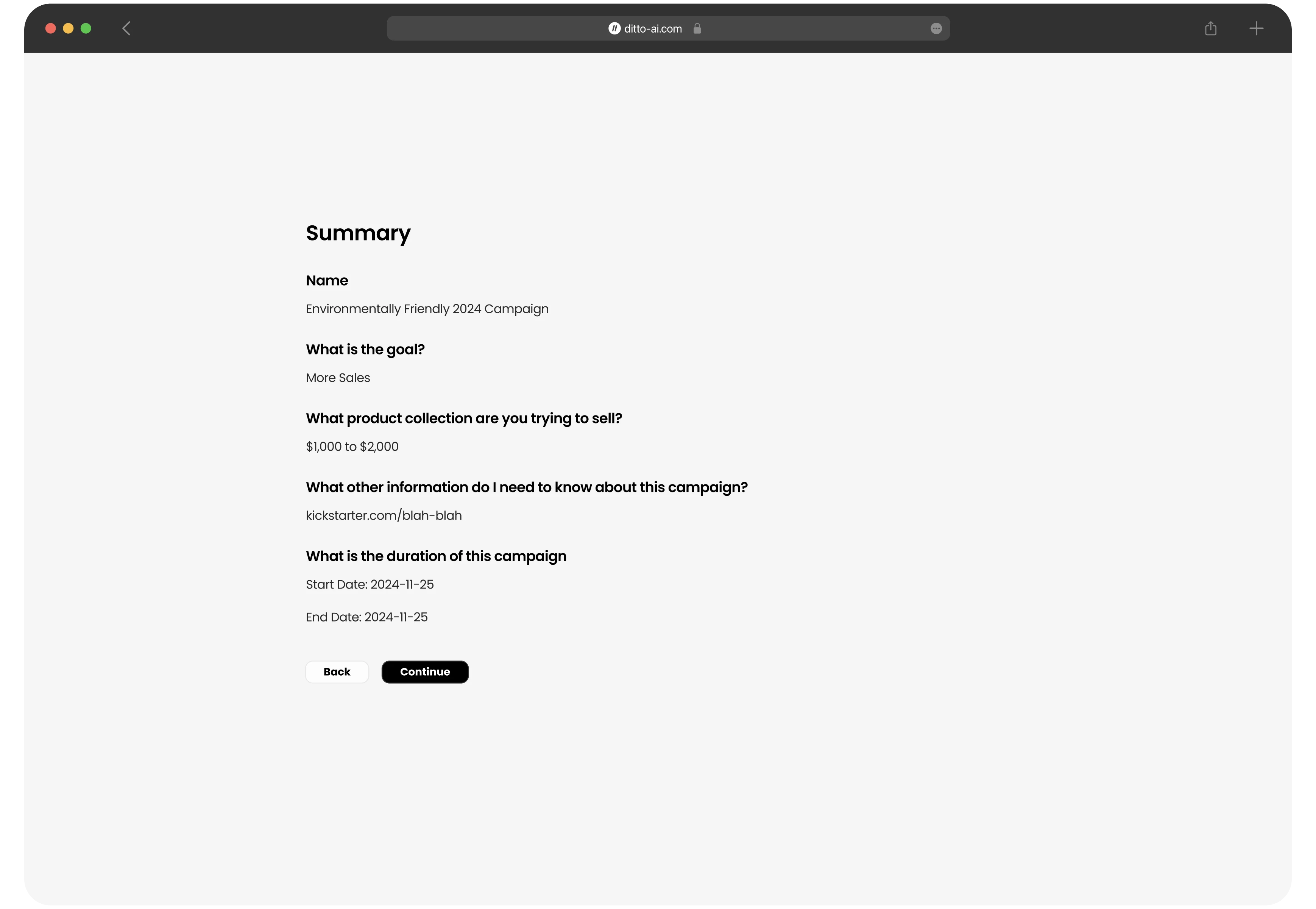
Recognising this, I redesigned the onboarding process completely, postponing less critical tasks like social account connections and focusing first on immediate user value: creating their first marketing campaign.
Using progressive disclosure, I developed a step-by-step onboarding tutorial built around three principles:
Background AI Processing. While users progressed through the onboarding steps, ditto quietly analysed their store data in the background, removing tedious setup work.
Interactive Tutorial. The onboarding experience guided users through campaign creation interactively, ensuring every step was straightforward, engaging, and informative.
Minimal and Contextual UI. I used ditto's flexible design system to present only essential information at each step. Progressive scrolling and subtle interactions kept users confident and oriented without causing overwhelm.
Challenges & Iterations
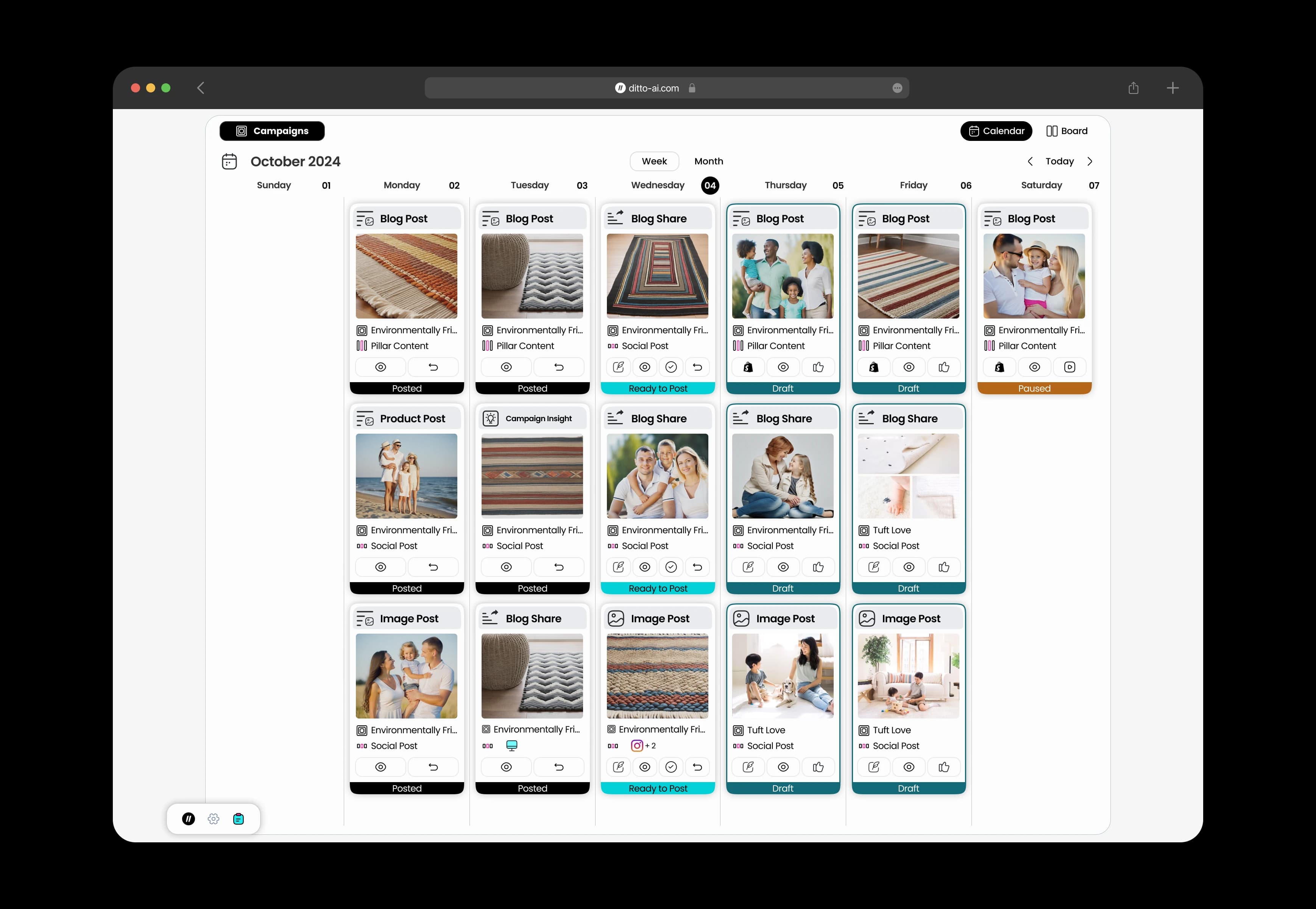
A notable challenge involved designing ditto's content calendar. Initially, we assumed users wanted to see all AI-generated content upfront. However, usability tests revealed users valued quality and tangible examples more than quantity.
I adjusted the design accordingly, emphasising quality content samples rather than overwhelming the user with volume, resulting in a simpler and more satisfying user experience.
Balancing Monetisation & UX
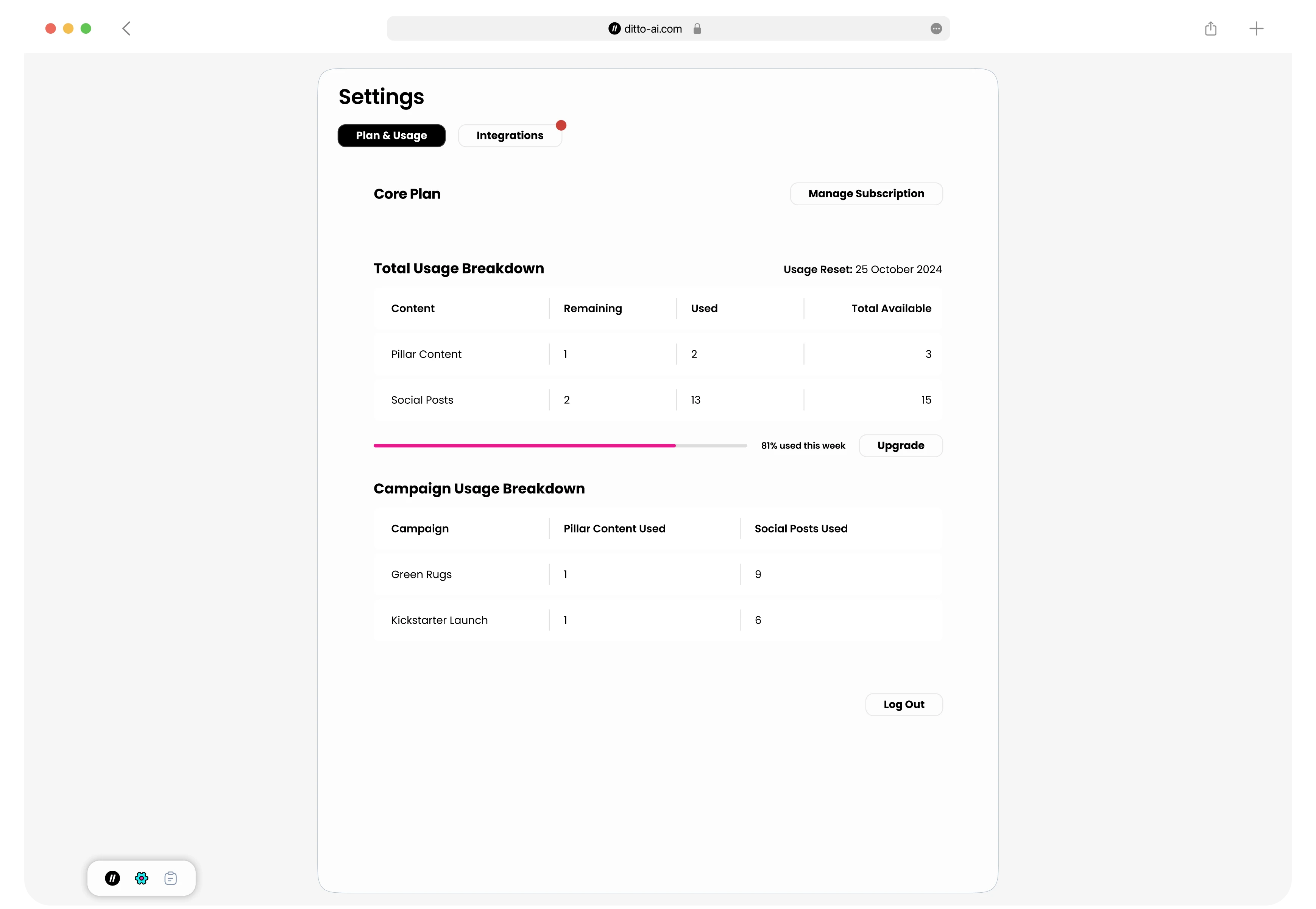
Developing subscription tiers presented unique UX and business challenges. AI processing costs varied significantly depending on the models used. To balance profitability and user value, I strategically aligned tasks to suitable AI models, clearly defining subscription tiers based on content quantity and type.
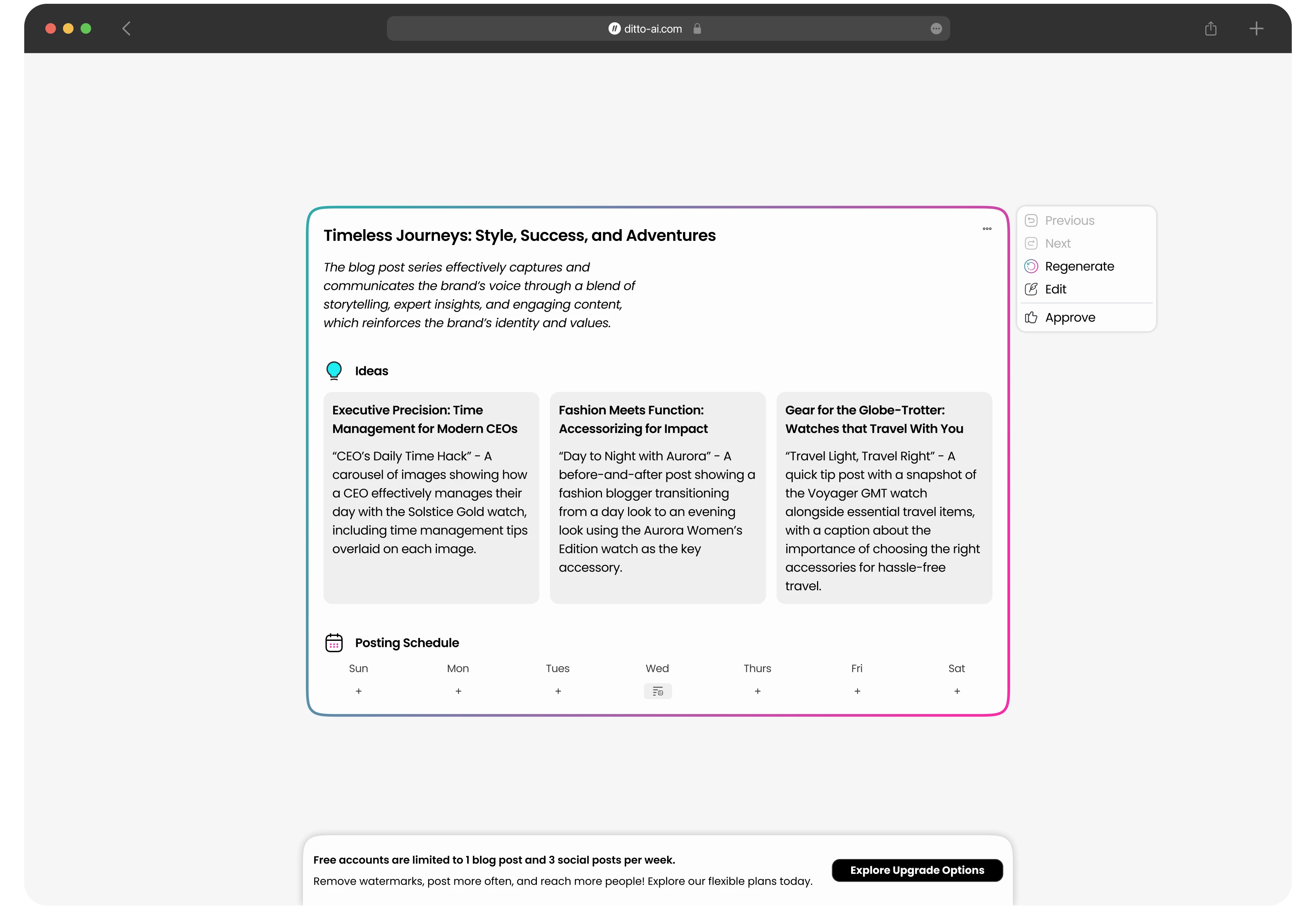
Free Tier. Users received one high-quality pillar content piece per week and three AI-generated social posts, subtly branded to promote ditto.
Upgrade Path. Users nearing tier limits saw gentle, unobtrusive prompts highlighting the benefits of higher tiers, maintaining simplicity and user trust while effectively encouraging upgrades.
To control costs, we limited open-ended interactions. Instead of an open-ended chatbot, ditto used predefined user flows, ensuring predictable operational costs and maintaining high-quality output.
Key Learnings
Getting users to their first successful outcome as fast as possible is the most important onboarding goal. Every step that delays that moment, account connections, configuration screens, explanatory copy, is a moment of doubt the user has to push through.
Progressive disclosure isn't just a UI pattern. It's a way of building a relationship: show me what you can do, then ask me to commit.